Managing High Blood Pressure at Home: Daily Routine Recommended by Doctors
Hypertension is called the silent killer for a reason. It produces no pain, no obvious symptoms, and no daily warning that it is quietly damaging your heart,
The Silent Threat That Responds Remarkably Well to Daily Discipline
Hypertension is called the silent killer for a reason. It produces no pain, no obvious symptoms, and no daily warning that it is quietly damaging your heart, kidneys, brain, and blood vessels. Most people discover they have high blood pressure during a routine check — often years after it first developed.
What makes hypertension particularly significant in the Indian context is its prevalence. An estimated 220 million Indians live with high blood pressure, and a large proportion of them are either unaware of it, untreated, or inconsistently managed. The consequences — heart attack, stroke, kidney failure, vision loss — are severe, but largely preventable with the right daily habits.
The good news is that blood pressure responds to lifestyle with remarkable consistency. The right daily routine, sustained over months, can reduce systolic blood pressure by 10–20 mmHg without a single medication change. Here is what that routine looks like.
Know Your Numbers — And What They Actually Tell You
Before building a management routine, you need a clear picture of where you stand. Blood pressure is measured in two numbers: systolic (the pressure when your heart beats) over diastolic (the pressure between beats), expressed in millimetres of mercury (mmHg).
Normal: Below 120/80 mmHg
Elevated: 120–129 / less than 80 mmHg — lifestyle intervention recommended
Stage 1 Hypertension: 130–139 / 80–89 mmHg — medication may be added depending on cardiovascular risk
Stage 2 Hypertension: 140/90 mmHg or higher — medication typically required alongside lifestyle changes
Hypertensive Crisis: 180/120 mmHg or higher — seek emergency care immediately
A single elevated reading does not confirm hypertension. Blood pressure fluctuates throughout the day based on activity, stress, posture, and even the time of day. Diagnosis is based on consistently elevated readings across multiple measurements over days or weeks — which is precisely why home monitoring is so valuable.
Home Blood Pressure Monitoring: Doing It Right
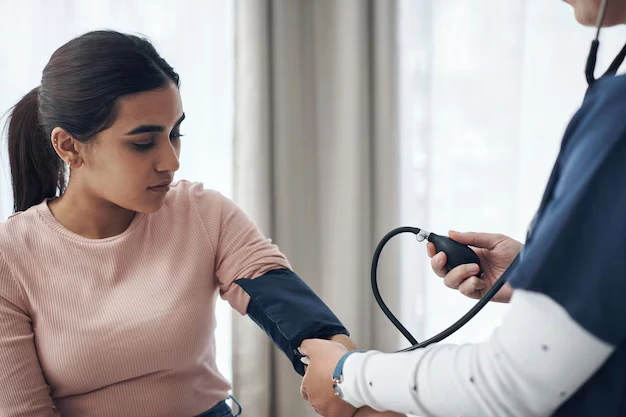
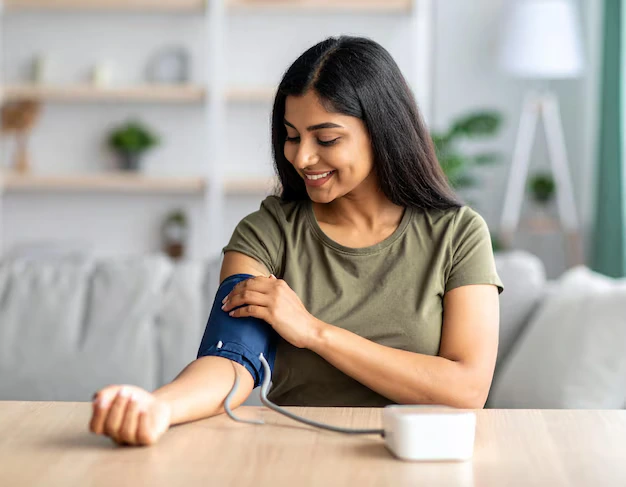
A home blood pressure monitor is one of the most useful medical devices a hypertensive patient can own — but only if used correctly. Errors in technique are common and lead to misleading readings that affect treatment decisions.
The right way to measure at home:
- Sit quietly for 5 minutes before measuring. Do not measure immediately after walking, eating, or experiencing stress.
- Sit upright in a chair with your back supported, feet flat on the floor, and legs uncrossed. Do not take readings while lying down or slouching — both affect the result.
- Position the cuff on your bare upper arm, at heart level. A cuff placed over clothing or held below heart level gives artificially altered readings.
- Do not talk during the measurement. Even a brief conversation raises readings by several mmHg.
- Take two readings, 1–2 minutes apart. Record both and use the average. The first reading is often higher due to anticipatory tension.
- Measure at the same time each day — ideally in the morning before medication and in the evening before dinner. Consistency in timing makes your log clinically meaningful.
- Use a validated upper-arm cuff monitor, not a wrist monitor. Wrist monitors are less accurate and highly position-dependent.
Record every reading — date, time, and both numbers. Share this log at every doctor’s visit. A two-week home log is more informative to your physician than a single clinic reading taken under pressure.
The DASH Approach to Eating — Adapted for Indian Kitchens
The Dietary Approaches to Stop Hypertension (DASH) diet is the most evidence-backed eating pattern for blood pressure reduction. Clinical trials show it can lower systolic blood pressure by 8–14 mmHg — comparable to a single blood pressure medication.
The core principles, practically adapted for Indian eating habits:
Reduce sodium aggressively: This is the single most impactful dietary change. The target is less than 2,300 mg of sodium per day — roughly one teaspoon of salt in total, including what is already in food. The most significant sources in Indian diets are pickles (achaar), papads, packaged snacks, instant noodles, processed meats, bread, and restaurant food. Cook at home with less salt, stop adding salt at the table, and read labels on packaged foods. Switching to rock salt or sendha namak does not meaningfully reduce sodium — salt is salt.
Increase potassium: Potassium counteracts sodium’s blood-pressure-raising effect by helping the kidneys excrete sodium more efficiently. Excellent sources in Indian cooking include bananas, sweet potato, spinach, tomatoes, coconut water, dal, and rajma. Most people with high blood pressure are under-consuming potassium, not over-consuming it.
Eat more vegetables and fruits: Aim for at least 5 servings of vegetables and 2 servings of fruit daily. Non-starchy vegetables — palak, methi, bhindi, brinjal, lauki, tinda, capsicum — are particularly good choices. They are low in calories, high in fibre and potassium, and inherently filling.
Choose whole grains over refined: Replace maida-based breads, biscuits, and snacks with whole wheat, jowar, bajra, or oats. The fibre in whole grains supports blood pressure reduction, weight management, and cardiovascular health simultaneously.
Limit saturated fat: Reduce ghee, butter, full-fat dairy, and red meat. Use cold-pressed oils in moderate quantities. Coconut oil, despite its cultural prevalence in South Indian cooking, is high in saturated fat and should be used sparingly by those with hypertension and cardiovascular risk.
Limit alcohol: Regular alcohol consumption raises blood pressure directly and blunts the effect of antihypertensive medication. If you drink, limit to no more than one standard drink per day for women and two for men — and ideally less.
Exercise: The Natural Blood Pressure Medication
Regular aerobic exercise is one of the most powerful non-pharmacological interventions for hypertension. The mechanism is direct: exercise strengthens the heart muscle, reduces arterial stiffness, and lowers resting vascular resistance — all of which reduce the pressure at which blood circulates.
Evidence suggests that consistent moderate aerobic exercise reduces systolic blood pressure by 5–8 mmHg — meaningful enough to eliminate the need for a medication in borderline cases, or to allow dose reduction in those already on treatment.
What works:
- 150 minutes of moderate-intensity aerobic activity per week — brisk walking, cycling, swimming, or dancing. This breaks down to 30 minutes, five days a week. Brisk walking is the most accessible and the most consistently adhered to exercise for middle-aged and older adults in India.
- Strength training 2 days a week — bodyweight exercises or light weights. Muscle mass helps regulate blood pressure by improving insulin sensitivity and reducing systemic inflammation.
- Morning walks are popular and effective — but avoid walking in extreme heat, on an empty stomach if you are on blood pressure or diabetes medication, or immediately after a large meal.
- Yoga and pranayama have documented, modest blood pressure-lowering effects — primarily through stress reduction and improved parasympathetic tone. Practices like Shavasana, slow diaphragmatic breathing (anulom-vilom), and restorative yoga are particularly relevant. Avoid inverted poses and breath-holding exercises (kumbhaka) if your blood pressure is poorly controlled.
Start gradually if you are new to exercise or have been sedentary. A sudden increase in exertion without appropriate progression can transiently raise blood pressure. If you experience chest pain, severe breathlessness, or dizziness during exercise, stop and consult your doctor before continuing.
Medication: Consistency Is the Entire Point
For the majority of people with Stage 1 or Stage 2 hypertension, medication is a necessary part of management — not a substitute for lifestyle changes, but a partner to them. The most common mistake hypertensive patients make is inconsistent medication use: skipping doses when they feel fine, or stopping medication when readings normalise.
Blood pressure feels normal even when it is dangerously elevated. Feeling well is not a reliable indicator that medication can be safely skipped. The medication is precisely why you feel well.
Practical medication habits that prevent errors:
- Take your antihypertensive medication at the same time every day — ideally linked to a fixed daily habit such as brushing your teeth in the morning or eating dinner. Consistency in timing maintains stable drug levels in your bloodstream.
- Most antihypertensive medications are best taken in the morning — but certain classes, including some calcium channel blockers and ACE inhibitors, may be prescribed at night to target the early morning blood pressure surge that is associated with stroke and heart attack risk. Follow your doctor’s specific instructions.
- Never double a dose if you miss one. Take it as soon as you remember — unless it is nearly time for your next dose, in which case skip the missed dose and continue normally.
- Do not stop medication when your blood pressure reads normal. This is the medication working. Stopping it will cause blood pressure to rise again, often within days.
- Keep a 30-day buffer. Running out of antihypertensive medication even for a few days causes rebound hypertension — a rapid and sometimes severe rise in blood pressure. Reorder well in advance.
- Report side effects rather than quietly stopping. Common side effects like a dry cough with ACE inhibitors, ankle swelling with calcium channel blockers, or dizziness with alpha-blockers are manageable — your doctor can switch you to an alternative class. Stopping without reporting denies you a solution.
Salt Awareness in Practice: Reading What You Actually Eat
Sodium reduction is discussed in virtually every hypertension guide — but the practical execution is poorly understood. Most people significantly underestimate their sodium intake because they focus only on the salt shaker, ignoring the far larger contribution from processed and restaurant foods.
A practical framework for reducing sodium without obsessing over every gram:
- Cook at home as much as possible. Restaurant meals — including healthy-seeming salads, soups, and grilled dishes — are typically very high in sodium. A single restaurant meal can contain your entire daily sodium allowance.
- Taste food before adding salt. Most cooked food, especially when fresh ingredients are used, does not need additional salt at the table. Remove the salt shaker from the dining table entirely.
- Replace salt with flavour. Lemon juice, cumin, coriander, black pepper, turmeric, ginger, and fresh herbs can replace or significantly reduce the need for salt in cooking without sacrificing taste. This is not a compromise — it is a genuinely different and often superior flavour profile.
- Read labels on packaged food. Look for sodium content per serving — not just per 100g, which obscures the actual serving amount. Anything above 400mg of sodium per serving is high. Avoid products where salt, sodium, sodium chloride, or monosodium glutamate (MSG) appear in the first five ingredients.
- Be specific about high-sodium culprits: instant noodles, namkeen, salted nuts, chips, biscuits, soy sauce, ketchup, ready-made masalas, pickles, and papads. These do not need to be eliminated entirely — but portions must be small and infrequent.
Stress and Sleep: The Two Variables Most Patients Overlook
A patient who eats well, exercises, takes medication faithfully, and still has poorly controlled blood pressure is often someone whose stress and sleep are unmanaged. These two variables have direct, measurable effects on blood pressure that cannot be offset by other lifestyle factors.
Chronic stress: Sustained psychological stress activates the sympathetic nervous system, raising heart rate and causing blood vessels to constrict — both of which raise blood pressure directly. Over time, chronic stress also promotes behaviours that worsen hypertension: poor dietary choices, reduced physical activity, increased alcohol use, and sleep disruption. Managing stress is not a soft lifestyle suggestion — it is a clinical imperative for hypertensive patients. Regular physical activity, adequate sleep, social connection, and where appropriate, professional mental health support, all have documented blood-pressure-lowering effects through stress reduction.
Sleep: Both insufficient sleep (less than 6 hours) and poor sleep quality are independently associated with higher blood pressure and harder-to-treat hypertension. Sleep deprivation activates the same stress hormone pathways as psychological stress. Obstructive sleep apnoea — where breathing repeatedly stops during sleep — is particularly common in overweight men with hypertension, and is a major driver of treatment-resistant high blood pressure. If you snore loudly, wake unrefreshed despite adequate sleep time, or have been told you stop breathing during sleep, discuss a sleep study with your doctor. Treating sleep apnoea alone can produce significant blood pressure improvement.
Weight Management: Every Kilogram Has a Blood Pressure Implication
The relationship between body weight and blood pressure is direct and well-established. For every kilogram of weight lost in overweight individuals with hypertension, systolic blood pressure falls by approximately 1 mmHg. Losing 10 kilograms, therefore, can reduce blood pressure by as much as a moderate-dose medication.
Central obesity — abdominal fat in particular — has a disproportionate effect on blood pressure compared to overall body weight. Waist circumference is a clinically significant measure: a waist above 90 cm in men and 80 cm in women (Asian-specific thresholds) is associated with meaningfully elevated cardiovascular risk.
Weight management for hypertensive patients does not require a dramatic diet. The same dietary principles that lower blood pressure — more vegetables and fruit, less salt and processed food, adequate protein, smaller portions — also promote gradual, sustainable weight loss. Combined with regular physical activity, this approach addresses both the weight and the blood pressure simultaneously, without requiring separate interventions for each.
Warning Signs That Require Immediate Medical Attention
Most of the time, hypertension is silent. But occasionally — particularly when blood pressure rises sharply or reaches crisis levels — symptoms appear that require urgent response.
Do not wait, do not monitor at home, and do not take an extra dose of your medication if you experience:
- Severe headache, especially a sudden, intense pain at the back of the head
- Sudden blurred vision, double vision, or loss of vision in one eye
- Chest pain, heaviness, or tightness
- Sudden weakness or numbness in the face, arm, or leg — particularly on one side
- Sudden difficulty speaking or understanding speech
- Shortness of breath at rest or with minimal activity
- A home reading above 180/120 mmHg, even without symptoms
These are signs of a hypertensive emergency — where dangerously elevated blood pressure is actively damaging organs. Call emergency services or go to the nearest emergency department immediately.
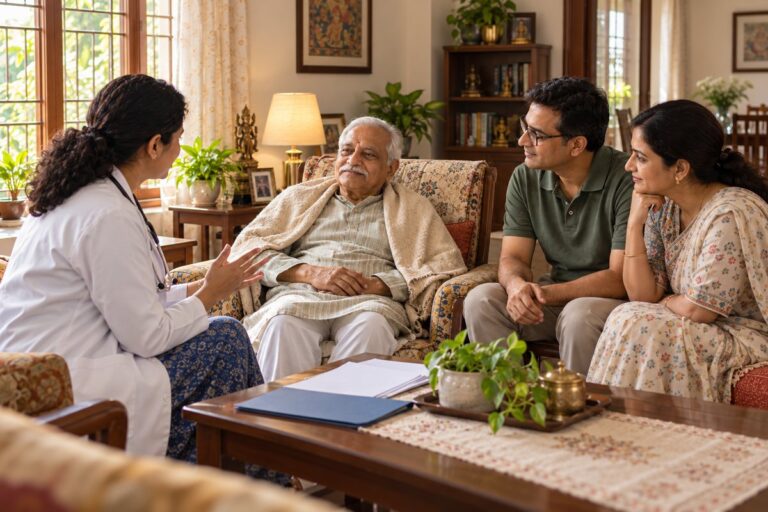
At Doctor at Door, we support hypertensive patients with home-based blood pressure monitoring, doctor consultations for medication review, and lifestyle counselling — all without requiring you to travel to a clinic. For elderly patients, those with mobility limitations, or anyone managing multiple chronic conditions simultaneously, having a medical professional assess your blood pressure trends at home can make a meaningful difference in how well your hypertension is controlled. Reach out to us to set up a regular home monitoring plan.
The Bottom Line
High blood pressure is controllable — but only if it is managed actively and consistently. The daily routine that works is not complicated: measure accurately, eat less salt and more vegetables, move regularly, take medication without interruption, sleep adequately, and manage stress as a medical priority rather than a lifestyle afterthought.
None of these steps is dramatic in isolation. Together, as a sustained daily pattern, they are profoundly effective. Hypertension that is well-managed at home carries a very different long-term prognosis than hypertension that is treated only when it causes a problem.
Start today. The best time to build this routine was at diagnosis. The second best time is now.
Frequently Asked Questions
What is a normal blood pressure reading at home?
A normal reading is below 120/80 mmHg. Readings consistently between 120–129/less than 80 are considered elevated. Anything at or above 130/80 mmHg on multiple readings qualifies as hypertension. Home readings can run 5–10 mmHg lower than clinic readings — factor this in when reviewing your numbers with your doctor.
How often should I check my blood pressure at home?
During an initial diagnosis or medication adjustment phase, check twice daily — once in the morning before medication, and once in the evening. Once stable and well-controlled, once daily or a few times a week is sufficient. Always take two readings, 1–2 minutes apart, and record the average.
Can high blood pressure be controlled without medication?
In early or mild hypertension (Stage 1), lifestyle changes alone — diet, exercise, weight loss, salt reduction, stress management — can sometimes bring blood pressure into normal range. However, most people with sustained hypertension above 140/90 will need medication in addition to lifestyle changes. Never stop or reduce prescribed medication without consulting your doctor.
Which foods should a hypertension patient strictly avoid?
Pickles, papads, processed and packaged foods, cured meats, ready-to-eat soups, salty snacks, and restaurant food prepared with high salt are the primary culprits. Also limit caffeine if you notice it raises your readings, and avoid liquorice root — it can significantly raise blood pressure. Alcohol should be minimal or avoided.
What are the warning signs of a hypertensive emergency?
Seek emergency care immediately for: severe headache (especially at the back of the head), sudden blurred or double vision, chest pain or tightness, difficulty breathing, sudden confusion or difficulty speaking, or a reading above 180/120 mmHg. These are signs of a hypertensive crisis — do not wait and watch.
Disclaimer: This information is for educational purposes and does not replace personalised medical advice. Hypertension management should always be guided by a qualified healthcare professional. Never stop or adjust prescribed medication without consulting your doctor.
Author

Chronic Disease Management
Diabetes Care at Home: How to Keep Blood Sugar in Control Without Stress
India is now home to over 100 million people living with diabetes — the highest number of any…
Home Healthcare
Nursing Home vs Hospital: What’s the Difference in India, and Where Does Home Care Fit?
In India a nursing home usually means a small private hospital, not a care home. How it differs…

Elder and Senior Care
Bedridden Patient Care at Home: A Daily Checklist for Families
A practical morning-to-night checklist for families caring for a bedridden parent at home, with the warning signs that…
Managing a condition at home?
Qualified, experienced doctors at your door in Pune and Nagpur — ₹999 a visit, within 90 minutes.