
Home Healthcare vs Hospital: Which Is Better for Long-Term Care?
Home healthcare vs hospital for long-term care: what each setting does best, how costs compare, and when only a hospital will do.

Hospital Bed or Home? The Question Families Face After a Hospital Stay
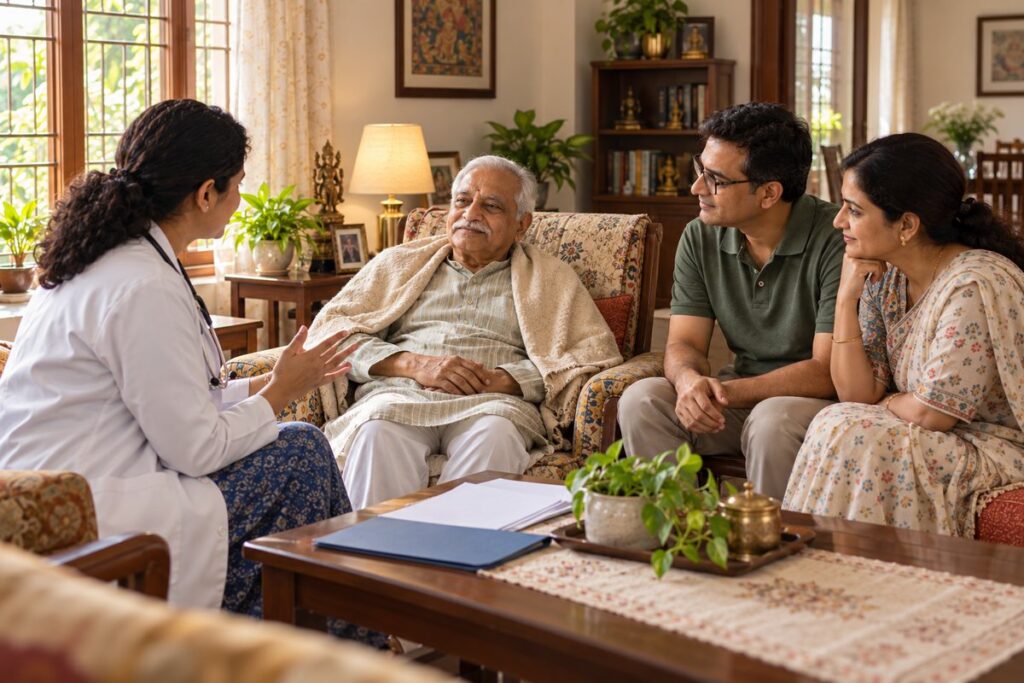
Your father has had a hip replacement and the ward is talking about discharge. Your mother’s diabetes and blood pressure need checking every few weeks. An elderly aunt can no longer manage on her own. Sooner or later every family asks the same thing: home healthcare vs hospital, where should the ongoing care happen?
There is no single right answer. Each setting does some things very well and others poorly, and the right choice depends on how stable the person is and how much care they need. This guide sets out how to think it through, step by step.
If you are weighing a nursing home against a hospital instead, that is a different question. Our guide to nursing home vs hospital in India explains how the two differ.
What Long-Term Care Actually Covers
Long-term care means ongoing help for someone who cannot fully manage daily life on their own, because of age, a long illness, disability or recovery from surgery. It usually means one or more of these:
- Recovery and rehabilitation after surgery, a stroke or a fall.
- Managing long-term conditions such as diabetes, high blood pressure, or heart or lung disease.
- Care for an older person with memory problems or limited mobility.
- Comfort and support for someone who is very unwell over a long period.
The kind of care needed matters more than anything else, because it decides which setting is safe.
What Hospitals Do Best
Hospitals are built for sudden, serious and fast-changing illness. They are the right place when:
- The person’s condition is unstable or changing quickly.
- Round-the-clock monitoring by nurses and specialists is needed.
- Scans and blood tests may be needed at short notice.
- A procedure or operation may be needed without warning.
- Intensive care support, such as a ventilator or dialysis, is needed.
For someone in these situations there is no substitute for a hospital. But once a person is stable and needs ongoing care rather than emergency resources, the balance shifts.
What Home Healthcare Does Best
Home healthcare brings doctors, nurses and therapists to the patient. It suits people who are stable but still need regular, skilled care:
- Regular checks of blood pressure, sugar and other vital signs.
- A review of medicines, especially when several are taken together.
- Wound dressing, injections and catheter care.
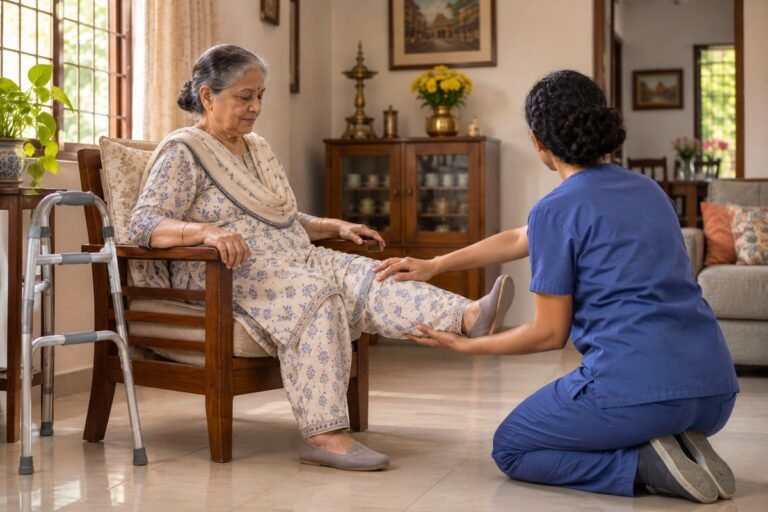
- Physiotherapy to rebuild strength and walking after surgery or a stroke.
- Care for an older person who finds the trip to a clinic tiring or difficult.
Many people recover more comfortably in familiar surroundings with family nearby, and older adults in particular can become confused or disoriented in a hospital ward. Care at home also spares a frail person the journey and the waiting room for every appointment.
Home Healthcare vs Hospital at a Glance
| Factor | Home healthcare | Hospital |
| Setting | The patient’s own home | A ward or room in the hospital |
| Comfort and privacy | High | Limited |
| Family involvement | Easy, family is present | Limited by visiting rules |
| Monitoring | Scheduled visits | Round-the-clock |
| Emergency response | Needs an ambulance transfer | Immediate, on site |
| Scans and tests | Arranged separately | Available on site |
| How you pay | Per visit or per plan | Daily room charges plus treatment |
| Best for | Stable, ongoing and recovery care | Sudden, unstable or intensive care |
Thinking About Cost Honestly
A long hospital stay for someone who is already stable can be expensive, because room charges run every day whether or not much treatment is happening. Home healthcare is usually paid per visit or per plan, so you pay for the care actually given.
Home care has costs of its own, though. Someone has to be with the patient between visits, whether a family member or a paid attendant, and equipment such as a hospital bed, a commode or a wheelchair may be needed. Add these up before you compare.
For reference, a Doctor at Door home visit is ₹999 and an online consultation is ₹499. For regular check-ups, the Senior Shield Plan offers 3 visits for ₹2699 or 6 visits for ₹4999.
Infection: A Reason Not to Stay Longer Than Needed
Hospitals care for many very sick people under one roof, so infections picked up in hospital are a known risk, especially for older people and anyone with weak immunity. It is one reason doctors send patients home once they are stable.
For someone who can be looked after safely at home, home is usually a lower-risk place to recover. That benefit only holds if the care at home is right, which is what the next two sections are about.
When the Hospital Is the Right Answer
Home care is not always safe, and a good provider will tell you so. Stay in hospital, or go back, when:
- Intensive care support is needed, such as a ventilator or dialysis.
- The person is unstable: their breathing, alertness or pain changes suddenly or often.
- A procedure is needed that cannot be done safely at home.
- The home itself is unsafe, for example without clean space, water or reliable electricity.
- Nobody can be with the person, and they cannot safely be left alone.
In an emergency, such as chest pain, difficulty breathing, signs of a stroke or a serious injury, call an ambulance on 108 or go to the nearest hospital straight away. Our guide on when to call a doctor at home vs go to the ER explains the difference.
How to Decide: Four Steps
1. Talk to the treating doctor before discharge
Ask whether the person is stable enough to go home, what needs checking and how often, and which symptoms mean coming back. Our guide to recovering at home after surgery lists the questions worth asking at discharge.
2. Look honestly at the home
Is there space for a bed and a safe path to the bathroom? Can medicines be organised and given on time? Is a responsible adult there for most of the day?
3. Plan who does what
Decide who gives the medicines, who handles meals and who is with the person at night. Note which tasks need a trained hand, such as dressings, injections or physiotherapy, and arrange those visits before the person comes home.
4. Check your insurance
Policies differ on what they cover outside a hospital. Ask your insurer what is included before you decide, and keep bills and prescriptions for any claim.
Where Doctor at Door Fits
Once the hospital has done its part, Doctor at Door brings the ongoing care home in Pune and Nagpur. A qualified doctor visits for check-ups and medicine reviews, with geriatric care at home for older parents. A trained nurse handles wound dressing at home, injections and catheter care, and physiotherapy at home helps rebuild strength and confidence.
If something changes between visits, a rapid relief visit brings a doctor to your home within 90 minutes*, Monday to Saturday from 8 AM to 8 PM and Sunday from 8 AM to 2 PM. *For most central locations.
Frequently Asked Questions
Is home healthcare as safe as staying in hospital?
For people who are stable and need ongoing or recovery care, home healthcare can be a safe choice when the right visits are arranged and someone is with them. Anyone who is unstable or needs emergency or intensive care should be in hospital.
How do I know if my parent can be cared for at home?
Ask the treating doctor before discharge whether they are stable enough, and what care and checks they will need. If the answer involves round-the-clock monitoring or intensive care, home is not the right place yet.
What can home healthcare include?
Doctor visits for check-ups and medicine reviews, wound dressing, injections, catheter care, physiotherapy, and regular check-ups through a plan. Doctor at Door offers these at home in Pune and Nagpur.
Does health insurance cover home healthcare in India?
It depends on the insurer and the policy. Check with your insurer before you decide, and keep bills and prescriptions for any claim.
What should we do if there is an emergency at home?
Call an ambulance on 108 or go to the nearest hospital straight away. Home healthcare is for planned and non-emergency care and does not replace emergency services.
Disclaimer: This information is for educational purposes and doesn’t replace personalized medical advice. Always consult qualified healthcare professionals for guidance specific to your health conditions and medications.
Author

*For most central locations; outer areas may take longer.
Home Healthcare
Physiotherapy at Home in Pune After Knee Replacement, Hip Surgery or Stroke: A Family Guide
Arranging rehab for a parent after knee replacement, hip surgery or a stroke? What a home physio session…
Home Healthcare
How to Book an Online Doctor Consultation: A Step-by-Step Guide
You can book an online doctor consultation with one call, WhatsApp or the online form. What you need,…
Home Healthcare
How to Call a Doctor at Home in Pune or Nagpur: A Step-by-Step Guide
You can call a doctor at home in Pune or Nagpur with one call or WhatsApp. What to…
Need a doctor at home?
Qualified, experienced doctors at your door in Pune and Nagpur — ₹999 a visit, within 90 minutes for most central locations.