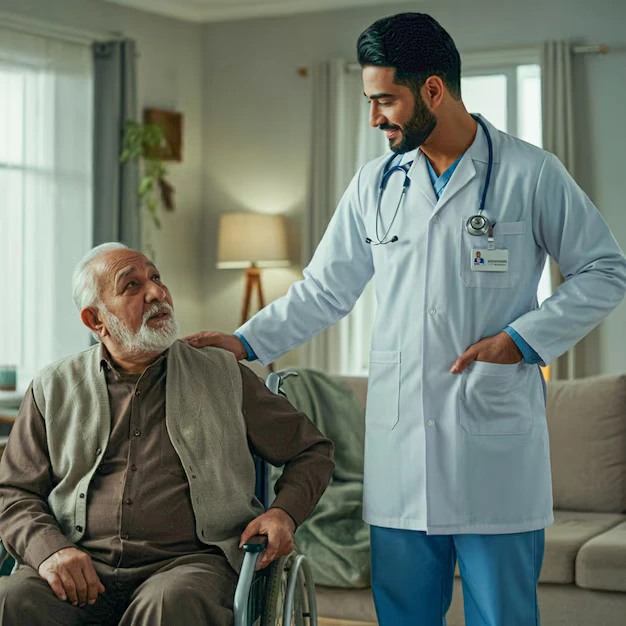

Nursing Home vs Hospital: What’s the Difference in India, and Where Does Home Care Fit?
In India a nursing home usually means a small private hospital, not a care home. How it differs from a hospital and an old age home, and where home care fits.
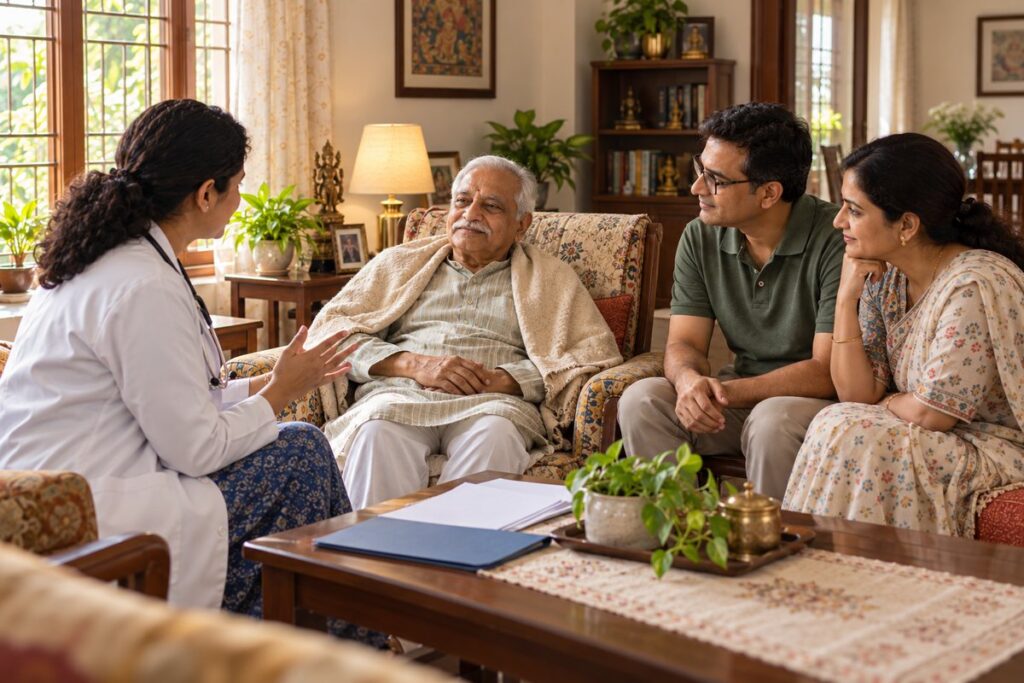
Is a Nursing Home a Hospital? In India, Usually Yes
Ask someone in London what a nursing home is and they’ll describe a residential home where elderly people live and receive long-term care. Ask someone in Pune and they’ll probably point you to a small private hospital down the road, with a doctor’s name on the board, a handful of beds and an operation theatre. That difference is the source of most confusion about nursing home vs hospital in India.
This guide explains what each term actually means here, how a nursing home differs from a large hospital, how both differ from an old age home or assisted living, and where home care fits for elderly parents who need medical attention but not a hospital bed.
What “Nursing Home” Means in India
In everyday Indian usage, a nursing home is a small private hospital. Many are run by one doctor or a small group of doctors, often a surgeon, physician or gynaecologist, and offer admission, minor and major surgery, deliveries, and inpatient treatment for common illnesses.
The legal meaning matches the everyday one. In Maharashtra, nursing homes and maternity homes are registered under the Maharashtra (formerly Bombay) Nursing Homes Registration Act, 1949, and in Pune the Pune Municipal Corporation registers and inspects them under that law. Many private hospitals in the city are registered as nursing homes under the same Act.
So when a doctor says “admit him to a nursing home for a few days”, they mean a small hospital, not a care home.
What Counts as a Hospital
“Hospital” usually refers to a larger facility: multi-speciality or super-speciality, with an intensive care unit, a 24-hour emergency department, in-house imaging such as CT and MRI, a blood bank or blood storage, and a wider team of specialists on call.
Large hospitals are built for complexity. They’re where you go for heart attacks and strokes, major trauma, complex surgery, and illnesses that might need intensive care.
Nursing Home vs Hospital: The Key Differences
Both treat patients and admit them, so the difference between a nursing home and a hospital is mainly scale and depth of backup.
| Feature | Nursing home (small hospital) | Multi-speciality hospital |
| Size | A few to a few dozen beds | Usually 100 beds or more |
| Doctors | One or a few, often the owners | Many specialists across departments |
| ICU | Small or none | Full intensive care, often several units |
| Emergency | May not run a full 24-hour emergency department | 24-hour emergency department |
| Imaging and labs | Basic, often outsourced | In-house CT, MRI, labs |
| Best for | Planned procedures, deliveries, common illnesses | Emergencies, complex or high-risk cases |
| Cost | Usually lower | Usually higher |
| Feel | Personal, smaller, closer to home | Larger, more systems, more waiting |
In the nursing home vs hospital decision, neither is “better” in general. A well-run nursing home is often the right place for a planned, routine procedure or a short admission. A large hospital is the right place when the situation is complex or could deteriorate fast.
Nursing Home vs Old Age Home vs Assisted Living
This is where families searching for elderly care often get confused, because what the rest of the world calls a nursing home goes by different names in India.
- Old age home: a residence for older people who can largely look after themselves, offering meals, company and basic supervision. Medical care is limited.
- Assisted living or senior living: apartments or rooms for seniors, with help available for daily tasks and some nursing support on call.
- Elder care home or long-term care facility: residential care for older people who need daily nursing help, sometimes including bedridden residents. This is the closest Indian equivalent of a Western “nursing home”.
- Nursing home (Indian sense): a small hospital, for treatment and short admissions, not a place to live.
When you’re looking for long-term care for a parent, search for “elder care home”, “assisted living” or “senior care” rather than “nursing home”, or you’ll mostly find small hospitals.
When Each Is the Right Choice
Choose a large hospital when
- It’s an emergency: chest pain, stroke signs, severe breathlessness, a serious fall or heavy bleeding.
- The illness may need an ICU, a specialist team or advanced imaging.
- The surgery is complex or the patient has several serious conditions.
A nursing home can be right when
- The procedure is planned and routine, and the treating doctor operates there.
- A short admission is needed for a common illness, such as IV treatment for dehydration.
- You value a smaller, more personal setting close to home, and the patient is otherwise stable.
A residential care facility fits when
- An older person needs daily help and nursing care that the family can’t provide at home.
- They are safer with round-the-clock supervision, for example with advanced dementia.
Where Home Care Fits
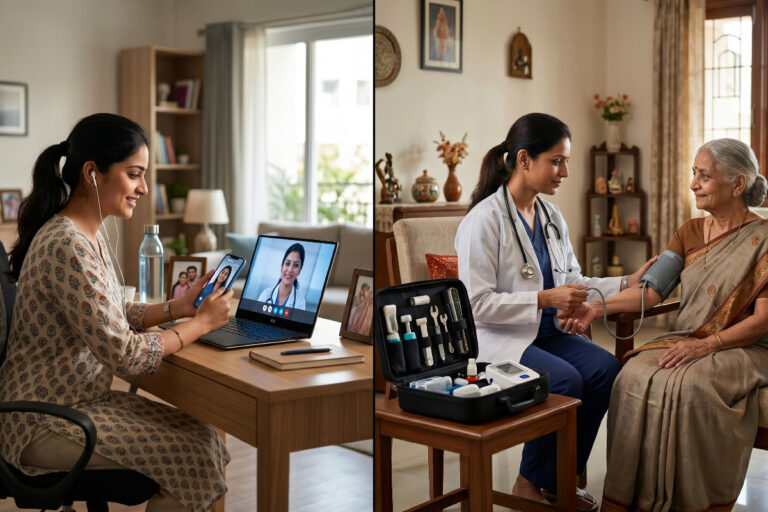
Many older people don’t need any of these. They need a doctor to see them when something changes, regular reviews of their chronic conditions, and help with specific procedures, all without leaving home.
Home care for the elderly covers that middle ground:
- Doctor home visits for fevers, infections, blood pressure or sugar problems, and medicine reviews.
- Bedside procedures such as wound dressing, injections, IV fluids and catheter care, done at home by a trained nurse.
- Ongoing geriatric care, where the same team follows a senior’s health over months and spots changes early.
- Care after discharge, so a parent leaves the hospital sooner and recovers in familiar surroundings.
For frail seniors, avoiding unnecessary admissions matters. Hospital stays bring infection risks, poor sleep, confusion and loss of muscle strength. Our article on home healthcare vs hospitals for long-term care goes into this in more depth.
Questions to Ask Before Choosing
- Does this condition need emergency backup, an ICU or specialists on site?
- Is the procedure planned, and where does the treating doctor practise?
- Is the patient stable enough to be treated at home with good support?
- Who will look after daily needs after treatment: family, a care home, or a home care team?
- What will the total cost be, including tests, medicines and follow-ups?
If you’re unsure, ask a doctor to help you decide. That is exactly what a home visit or an online consultation is useful for.
How Doctor at Door Helps Families Decide
At Doctor at Door, qualified, experienced doctors visit homes across Pune (including PCMC) and in South-West Nagpur. A doctor can assess an elderly parent at home, treat what can be treated there, and tell you plainly when hospital admission is the right call. For ongoing support, our geriatric care at home and Senior Shield plan keep a regular eye on seniors’ health.
A rapid relief visit costs ₹999 and brings a doctor to you within 90 minutes*, Monday to Saturday from 8 AM to 8 PM and Sunday from 8 AM to 2 PM. To learn more about the signs that an older parent needs specialist support, read what is geriatric care.
Frequently Asked Questions
What is the difference between a nursing home and a hospital in India?
In India, a nursing home is usually a small private hospital with fewer beds, fewer specialists and limited ICU and emergency backup. A multi-speciality hospital is larger, with a 24-hour emergency department, intensive care and in-house imaging.
Is a nursing home the same as an old age home?
No. In India, a nursing home is a small hospital for treatment and short admissions. An old age home is a residence for older people, with limited medical care. Residential care for seniors who need daily nursing is usually called an elder care home or assisted living.
When should I choose a hospital over a nursing home?
Choose a large hospital for emergencies, for illnesses that may need an ICU or specialist team, and for complex surgery. A nursing home can suit planned, routine procedures and short admissions for stable patients.
Can an elderly person be treated at home instead of a nursing home?
Often, yes. Many fevers, infections, chronic disease problems and procedures such as wound dressing, injections and catheter care can be managed at home by a visiting doctor or trained nurse, as long as the patient is stable.
Are nursing homes regulated in Maharashtra?
Yes. Nursing homes in Maharashtra are registered under the Maharashtra Nursing Homes Registration Act, 1949, and in Pune the municipal corporation registers and inspects them.
Disclaimer: This information is for educational purposes and doesn’t replace personalized medical advice. Always consult qualified healthcare professionals for guidance specific to your health conditions and medications.
Author

Home Healthcare
Need a Doctor Today in Pune? Home Visit, Clinic, Urgent Care or ER
Clinic, hospital casualty, home visit or online consultation? How to get a same-day doctor in Pune, with real…
Home Healthcare
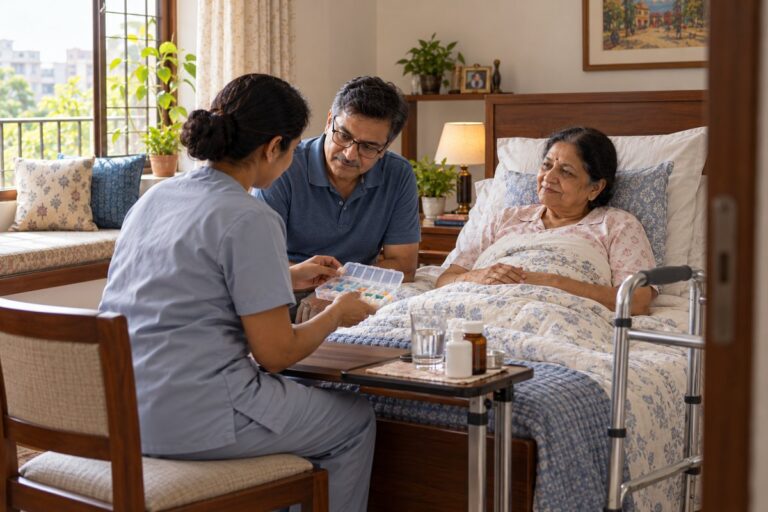
Recovering at Home After Surgery: What to Watch in the First Two Weeks
The first two weeks home after an operation decide how smoothly recovery goes. Medicines, food, movement, drains, and…
Home Healthcare
Online Doctor Consultation vs Home Visit: When to Choose Which
Some problems need a doctor in the room; many do not. A symptom-by-symptom guide to choosing between an…
Need a doctor at home?
Qualified, experienced doctors at your door in Pune and Nagpur — ₹999 a visit, within 90 minutes.