

Monsoon Health Problems in Pune: When to Call a Home Doctor
Pune's monsoon brings a predictable set of illnesses. Here is what to watch for, how to prevent the common ones, and the warning signs that need a doctor today.
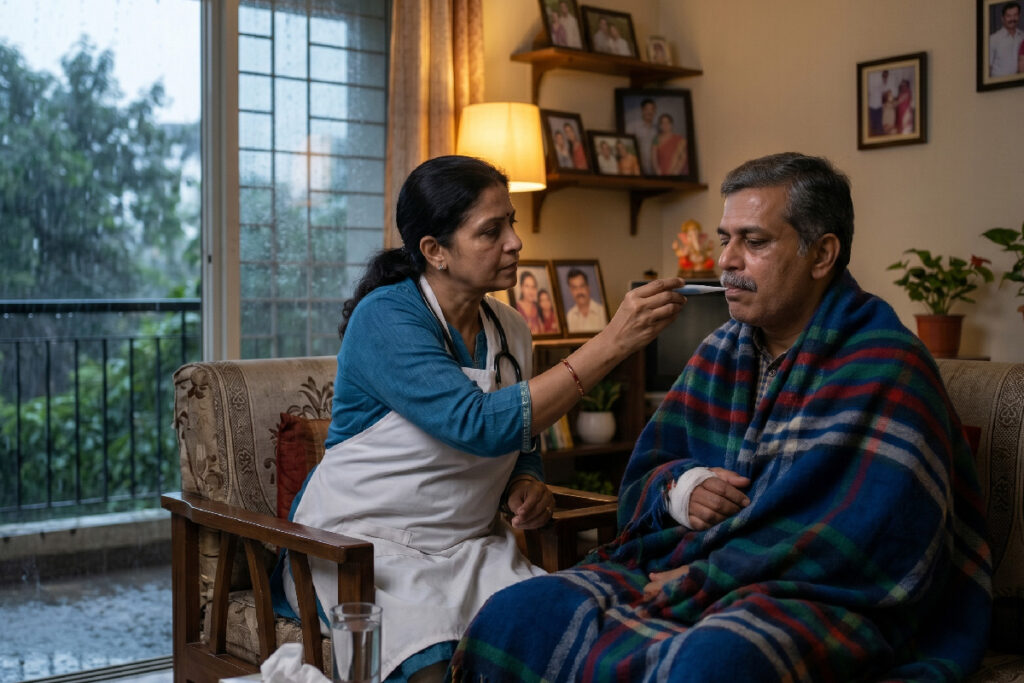
Pune’s Monsoon Brings More Than Rain
Every year it follows the same rhythm. The first proper showers arrive, the city exhales after the heat — and within a fortnight, clinics fill up. Fevers that linger longer than they should. Stomach upsets that run through an entire household. Coughs that outstay the season.
It isn’t coincidence. Standing water in construction sites and terrace pots breeds mosquitoes. Water supply lines contaminate. Humidity keeps surfaces damp and airways irritated. Pune’s mix of dense old neighbourhoods, rapid new construction and lush green cover creates near-ideal conditions for all of it.
Most monsoon illness is manageable at home. A small fraction of it is genuinely dangerous, and the difference is usually visible in specific warning signs — if you know which ones to watch. This is a guide to both.
Dengue and Chikungunya: The Mosquito-Borne Ones
Both are spread by the Aedes mosquito, which breeds in clean standing water — a bucket on the balcony, a plant saucer, an uncovered overhead tank, a discarded tyre. It bites during the day, mostly early morning and late afternoon, which is why night-time nets alone don’t solve it.
Dengue typically starts abruptly with high fever, a severe headache concentrated behind the eyes, intense joint and muscle pain (the old name “breakbone fever” is well earned), nausea and often a rash appearing a few days in.
Chikungunya looks similar at onset but is dominated by joint pain, often in the hands, wrists, ankles and feet, sometimes with visible swelling. Its distinguishing feature is persistence — the fever passes in days, but joint pain can linger for weeks or months.
The single most important thing to get right: in any suspected dengue, use paracetamol only for fever and pain. Avoid aspirin, ibuprofen and other NSAIDs — they increase bleeding risk when platelets are falling. Many households reach for a combination painkiller out of habit, and in dengue that habit is dangerous.
The critical phase in dengue often arrives as the fever drops, around day four to six — precisely when families relax. A patient who becomes more unwell as the temperature settles needs urgent review, not reassurance.
Leptospirosis: The One People Forget
Every monsoon, Pune sees waterlogged lanes and people wading through them to get to work or school. Leptospirosis spreads through water contaminated with animal urine, entering the body through cuts, grazes or soft, sodden skin on the feet.
It presents as fever with headache, chills, red eyes, and characteristically severe calf muscle pain. That calf pain, in someone who waded through floodwater in the preceding two weeks, is the detail that should prompt a mention to the doctor — it can look like any other viral fever otherwise, and it responds to prompt antibiotic treatment.
If you can’t avoid walking through standing water, wash and dry your legs and feet properly afterwards, and cover any cut before you go out rather than after you come back.
Water-Borne Illness: Typhoid, Gastroenteritis and Hepatitis A
Monsoon is when contaminated water most easily reaches the tap and the plate. Three problems dominate.
Gastroenteritis — vomiting, watery diarrhoea, cramps — is the most common and usually settles in a few days. The real danger isn’t the infection but the dehydration that follows, particularly in young children and older adults.
Typhoid behaves differently and is often missed early. It builds gradually over a week rather than striking suddenly, with fever climbing in a step-ladder pattern, abdominal discomfort, headache and marked exhaustion. Any fever running beyond five days deserves testing rather than more paracetamol.
Hepatitis A announces itself with tiredness, loss of appetite, nausea and an aversion to food, followed by dark urine and yellowing of the eyes. It usually resolves with rest and supportive care, but needs confirming and monitoring.
Prevention is unglamorous and effective: drink boiled or properly filtered water, and be sceptical of ice; avoid cut fruit, salads and juices from roadside stalls during these months; wash vegetables in clean water; and eat food freshly cooked and hot rather than reheated hours later.
Viral Fever, Flu and the Damp-Weather Complaints
Ordinary viral fevers spread rapidly in monsoon, often moving through a household or an office floor in a week. They generally settle in three to seven days with rest, fluids and paracetamol. Distinguishing them from something bacterial matters, because antibiotics do nothing for a virus — we’ve covered the practical differences in viral fever vs bacterial infection.
Humidity brings its own crop of problems. Fungal skin infections flourish in damp clothing and skin folds — ringworm, athlete’s foot, and stubborn itching in the groin and under the breasts. Keeping skin dry, changing out of wet clothes promptly and not sharing towels does more than any cream.
Asthma and allergic rhinitis reliably flare, driven by mould spores, dust mites thriving in the humidity, and damp walls. Anyone on an inhaler should make sure they have a current supply and a written action plan before the season, not during a 2 AM attack.
Flu vaccination ahead of the season is worth considering, especially for seniors and those with chronic conditions — it can be given at home without a clinic trip.
Who Needs Watching More Closely
The same illness carries different stakes depending on who has it.
Older adults dehydrate quickly, often without feeling thirsty, and may show infection as confusion, weakness or a fall rather than fever. A senior who becomes suddenly muddled during monsoon should be assumed to have an infection until proven otherwise.
Young children lose fluid fast and can go from playful to seriously dehydrated within hours.
People with diabetes see blood sugar swing during any infection, and are more prone to skin and foot infections in damp conditions. Those with heart, kidney or lung disease tolerate both dehydration and fever poorly. And anyone on immunosuppressive treatment should have a lower threshold for seeking help.
Practical Prevention for a Pune Household
Break the mosquito cycle weekly
Once a week, empty and scrub anything holding water — plant saucers, terrace buckets, coolers, pet bowls, the drip tray behind the fridge, and construction debris near the building. Aedes breeds in remarkably small amounts of clean water, so tipping out is more effective than any spray. Keep overhead tanks covered, use repellent during the day, and fit mesh on windows.
Control what the household drinks and eats
Boiled or filtered water only, including for brushing teeth if supply quality is doubtful. Skip street-side cut fruit and juices for these months. Cook thoroughly and eat fresh.
Keep the house and the people dry
Dry clothes fully before wearing, air out damp rooms whenever the rain pauses, address mould on walls early, and change out of wet footwear rather than staying in it all morning.
When to Call a Doctor Today
Arrange a same-day medical review if you see any of the following:
Fever lasting more than three days without improvement, or any fever beyond five days. Fever with a rash. Severe headache with pain behind the eyes. Vomiting that prevents keeping fluids down. Diarrhoea continuing beyond two days, or any blood in the stool. Yellowing of the eyes or dark urine. Fever in an elderly person, an infant, a pregnant woman or anyone with a chronic condition. Severe calf pain after wading through floodwater. Or a fever that settles and leaves the person more unwell rather than better.
Home testing isn’t the answer here — dengue, typhoid, malaria and leptospirosis look alike in the first few days and are separated by blood tests, not by guesswork.
When to Go to Hospital Immediately
Do not wait for a home visit for any of these. Go to the nearest emergency department now.
Bleeding from the gums or nose, black or tarry stools, or blood in vomit. Severe, persistent abdominal pain. Persistent vomiting with no urine passed for many hours. Difficulty breathing. Cold, clammy or mottled skin with a weak, rapid pulse. Drowsiness, confusion, unresponsiveness or a seizure. Severe dehydration in a child — sunken eyes, no tears, dry mouth, unusually floppy. Or a rapidly spreading rash with fever.
Several of these are dengue warning signs, and dengue can deteriorate quickly once they appear.
For everything short of that, Doctor at Door brings a qualified doctor to your home across Pune and Nagpur within 90 minutes* — examination, home sample collection where tests are needed, and treatment started without a feverish patient sitting in a crowded waiting room during peak monsoon. Book a rapid relief visit, or use an online consultation if you’re mainly reviewing reports.
Frequently Asked Questions
Which diseases are most common during Pune’s monsoon?
Dengue, chikungunya and malaria from mosquitoes; typhoid, gastroenteritis and hepatitis A from contaminated water; leptospirosis after wading through floodwater; plus viral fevers, fungal skin infections and asthma flare-ups.
How long should a monsoon fever last before I see a doctor?
Seek review if fever persists beyond three days without improvement, or immediately at any point if there is a rash, severe headache, persistent vomiting or bleeding.
Which painkiller is safe in suspected dengue?
Paracetamol only. Aspirin, ibuprofen and other NSAIDs should be avoided because they increase bleeding risk when platelet counts fall.
Can dengue be treated at home?
Mild dengue is often managed at home with fluids, rest and paracetamol under medical supervision and with monitoring of blood counts. Any warning sign — bleeding, severe abdominal pain, persistent vomiting, drowsiness — requires immediate hospital care.
How do I stop mosquitoes breeding at home?
Empty and scrub every container holding water once a week, including plant saucers, coolers and terrace buckets, and keep tanks covered. Aedes breeds in small amounts of clean water, so removing it matters more than spraying.
Disclaimer: This information is for educational purposes and doesn’t replace personalized medical advice. Always consult qualified healthcare professionals for guidance specific to your health conditions and medications.
Author


Preventive Health
When to Call a Doctor at Home vs Go to the ER
Red-flag symptoms that mean go to hospital now, the large middle ground a home doctor covers, and the…
Preventive Health
How to Monitor Blood Oxygen at Home: A Simple Guide
A practical guide to using a pulse oximeter at home: correct technique, what your SpO2 number means, why…

Preventive Health
How to Boost Immunity Naturally: Doctor-Backed Strategies
Every time the season changes, your inbox fills with ads for immunity supplements. Every time you catch a…
Not sure if it needs a doctor?
Qualified, experienced doctors at your door in Pune and Nagpur — ₹999 a visit, within 90 minutes.