

Dengue and Viral Fever in Pune: When Is Home Care Enough, and When Is It Hospital?
Most dengue and viral fevers can be watched at home with a doctor's guidance. The days that matter, the warning signs that mean hospital, and what platelet counts tell you.
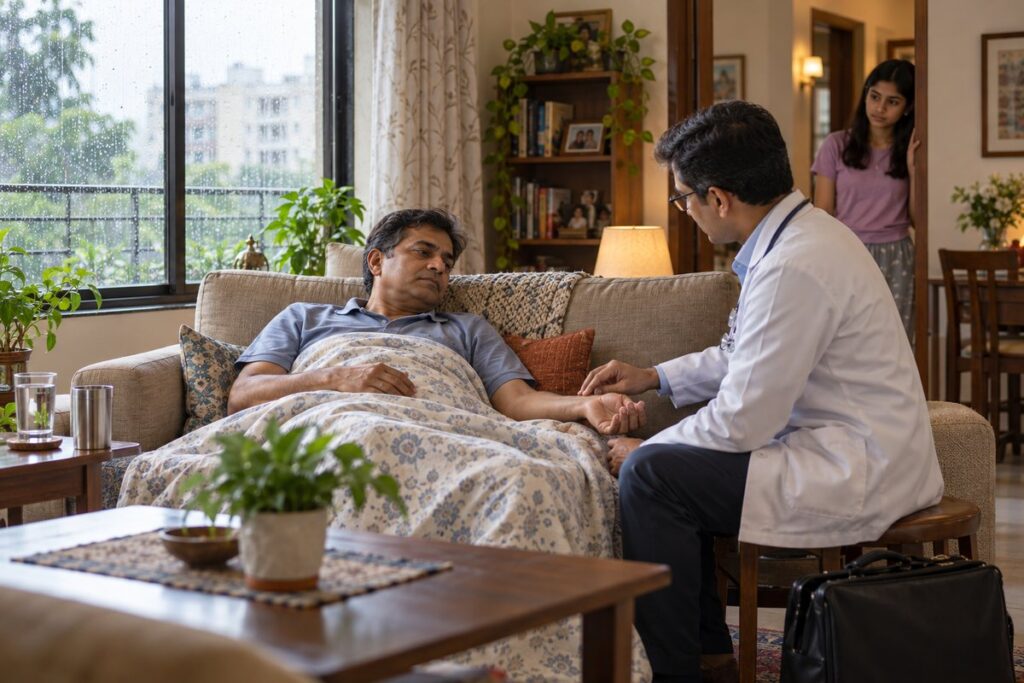
Fever in the House Again. Is This Dengue?
Every monsoon, the same question arrives in Pune homes around the third day of a fever: is this ordinary viral fever, or is it dengue? And if it is dengue fever, can it be managed at home, or does it mean hospital? Families tend to swing between panic over a platelet report and brushing off a fever that deserves attention.
The reassuring truth is that most people with dengue fever at home recover with rest, fluids and a doctor keeping an eye on them. The important part is knowing which days need closest watching and which warning signs mean the home plan is over. This guide covers both.
If you want a broader view of the season, our guide to monsoon health problems in Pune covers waterborne illness, leptospirosis and more. This post focuses on dengue and viral fever.
Dengue or Ordinary Viral Fever? What the First Days Look Like
In the first two or three days, dengue and other viral fevers can look almost identical. Both bring fever, body ache, headache and tiredness. A few features make dengue more likely:
- A sudden high fever, often with severe pain behind the eyes.
- Intense muscle and joint pain, the reason dengue is called “breakbone fever”.
- A flushed face, nausea, loss of appetite, and sometimes a rash appearing a few days in.
- Someone else in the building or neighbourhood has recently had dengue.
None of these confirm it. Only a blood test can, and even then the right test depends on which day of fever it is. Our explainer on viral fever vs bacterial infection covers how doctors tell fevers apart more generally.
Why Days 3 to 7 Matter Most
Dengue has a pattern that catches families off guard. The fever often breaks around day three to seven, and everyone relaxes. But this is exactly the period, called the critical phase, when a small number of people develop complications: fluid leaking out of blood vessels, a falling platelet count and, in severe cases, bleeding or shock.
So the rule is counter-intuitive: when the fever comes down, watch more closely, not less. For the two days after the fever settles, keep checking how the person is drinking, how often they pass urine, and how alert they are.
Dengue Warning Signs That Mean Hospital
If any of these appear, the home plan is over. Go to hospital, or call emergency services if the person is very unwell:
- Severe or persistent pain in the belly.
- Vomiting that won’t stop, or being unable to keep fluids down.
- Bleeding from the gums or nose, blood in vomit or stools, or black stools.
- Unusual drowsiness, restlessness, irritability or confusion.
- Fast or difficult breathing.
- Cold, clammy hands and feet, or a weak, rapid pulse.
- Passing very little urine for six hours or more.
These are the dengue warning signs doctors use to decide on admission. They matter more than any single platelet number.
Managing Dengue Fever at Home, Safely
When none of the warning signs are present and a doctor has assessed the person, dengue fever at home is managed with simple, consistent care.
Fluids come first
Dehydration is what turns a manageable dengue into a dangerous one. Offer water, oral rehydration solution, coconut water, clear soups, buttermilk and fruit juices through the day, a little at a time if there’s nausea. Keep a rough tally: how many glasses, how many times urine was passed.
Rest, and fever control the doctor approves
Rest in a cool room, light clothing, and a damp cloth on the forehead help. For fever and pain, ask the doctor what to take. Don’t use painkillers such as aspirin or ibuprofen for a suspected dengue fever unless a doctor specifically advises it, because they can increase bleeding risk.
Keep simple records
Write down temperature readings with the time, fluid intake, urine, and any new symptom. If you have a pulse oximeter or blood pressure monitor, note those too. Records like these let a doctor judge the trend in minutes, at home or over a video call.
Mosquito control still matters
A person with dengue can pass the virus to mosquitoes, which then bite others in the family. Use nets and repellents for the patient, and empty standing water in pots, coolers, trays and buckets around the home.
What Platelet Counts Do and Don’t Tell You
Platelet anxiety is the single biggest source of panic in dengue season. A falling platelet count is expected in dengue and, on its own, is not a reason to rush to hospital. Doctors look at the trend over repeated tests, the haematocrit (how concentrated the blood is), and above all how the patient looks and whether warning signs have appeared.
Common tests include the NS1 antigen test in the first few days of fever, antibody tests later, and a complete blood count repeated as advised. Ask the doctor which tests to do and on which day, rather than testing every few hours. Unproven home remedies sold as “platelet boosters” are not a substitute for fluids and monitoring.
Dengue Fever at Home or Hospital: A Quick Guide
| Situation | Home care with a doctor’s guidance | Go to hospital |
| Fever, body ache, eating and drinking | Yes, with daily review | Not needed |
| Fever settles on day 4 or 5, patient alert | Yes, watch closely for 48 hours | If warning signs appear |
| Platelets falling slowly, no warning signs | Usually yes, repeat tests as advised | If falling fast or with bleeding |
| Vomiting, can’t keep fluids down | No | Yes, may need IV fluids in hospital |
| Bleeding gums, nose, black stools | No | Yes, urgently |
| Drowsy, confused, cold clammy hands | No | Emergency |
| Infant, pregnant woman, elderly person with diabetes or heart disease | Only after a doctor’s assessment | Low threshold for admission |
Who Needs Extra Caution
Some people should have a lower threshold for hospital care: older adults, pregnant women, babies and young children, and anyone with diabetes, kidney or heart disease, or on blood thinners. In older adults especially, dengue can show up as weakness, dizziness or confusion rather than a striking fever, so trust any sense that “something isn’t right”.
For elderly parents, a doctor checking at home on day one and again around the time the fever settles is often the most useful thing a family can arrange.
When a Home Visit Fits
A home visit for fever makes most sense when the person is stable but you want a proper examination, a decision about blood tests, and a plan for the next few days, without dragging someone with a high temperature through traffic and monsoon rain to a crowded clinic.
A doctor visiting at home can check hydration, pulse, blood pressure and oxygen, look for warning signs, advise on testing, and decide whether the person can stay home or needs admission. If they need hospital, you’ll be told so plainly.
At Doctor at Door, qualified, experienced doctors visit homes across Pune (including PCMC) and in South-West Nagpur, Monday to Saturday from 8 AM to 8 PM and Sunday from 8 AM to 2 PM. A rapid relief visit costs ₹999 and brings a doctor to you within 90 minutes*. For follow-up reviews once a doctor has seen the patient, an online consultation at ₹499 is often enough. If a doctor prescribes injections, our team can also give IV and IM injections at home.
Not sure whether this is a home-visit or a hospital situation? Our guide to choosing between a doctor at home and the emergency room walks through it.
Frequently Asked Questions
Can dengue fever be treated at home?
Most people with dengue recover at home with rest, plenty of fluids and fever control approved by a doctor. Home care is only appropriate when a doctor has assessed the patient and there are no warning signs such as bleeding, persistent vomiting, severe belly pain or drowsiness.
What are the warning signs of severe dengue?
Severe belly pain, persistent vomiting, bleeding from gums or nose, blood in vomit or stools, drowsiness or restlessness, fast breathing, cold clammy skin and passing very little urine. Any of these means going to hospital.
Why is dengue more dangerous when the fever goes down?
The critical phase usually comes around days three to seven, often just as the fever breaks. This is when fluid leakage and bleeding complications can appear, so the patient should be watched more closely for the next two days, not less.
At what platelet count should a dengue patient be admitted?
There is no single number that decides it. Doctors look at how fast platelets are falling, the haematocrit, warning signs and how the patient looks. A low count with no warning signs is often managed with close monitoring.
Can a doctor visit at home for dengue in Pune?
Yes. A doctor can examine the patient at home, check hydration and warning signs, advise on blood tests, and decide whether home care is safe or hospital admission is needed. Doctor at Door visits across Pune, including PCMC.
Disclaimer: This information is for educational purposes and doesn’t replace personalized medical advice. Always consult qualified healthcare professionals for guidance specific to your health conditions and medications.
Author

Preventive Health
Monsoon Health Problems in Pune: When to Call a Home Doctor
Pune's monsoon brings a predictable set of illnesses. Here is what to watch for, how to prevent the…

Preventive Health
When to Call a Doctor at Home vs Go to the ER
Red-flag symptoms that mean go to hospital now, the large middle ground a home doctor covers, and the…
Preventive Health
How to Monitor Blood Oxygen at Home: A Simple Guide
A practical guide to using a pulse oximeter at home: correct technique, what your SpO2 number means, why…
Not sure if it needs a doctor?
Qualified, experienced doctors at your door in Pune and Nagpur — ₹999 a visit, within 90 minutes.