

Post-Surgery Wound Care at Home: What Nurses Do Differently
The weeks after discharge decide how a surgical wound heals. Here is what trained nurses do differently, and the signs that mean call someone today.
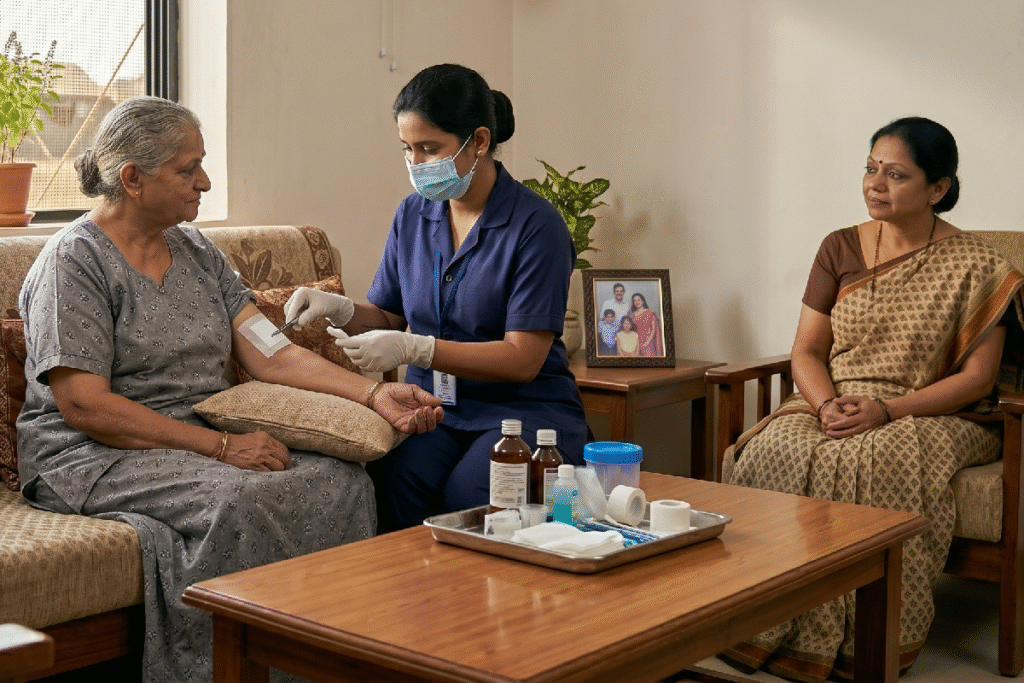
The Days After Discharge Are the Ones That Decide Recovery
The surgery went well. The hospital stay was short. You’re handed a discharge summary, a strip of antibiotics, a follow-up date two weeks out, and sent home with a dressing over an incision nobody has fully explained to you.
This is where most surgical complications actually happen — not in theatre, but in the fortnight afterwards, at home, where a wound is either kept clean and watched properly or quietly gets into trouble.
Families manage this far better than they expect to, given the right information. Here’s what proper wound care looks like, what a trained nurse does that’s different from a careful relative with a first-aid box, and the signs that mean stop and call someone.
How a Surgical Wound Heals
Knowing the normal timeline is what lets you spot the abnormal.
Days 1–4. Inflammation. Some redness at the edges, mild swelling, warmth and discomfort are expected — this is the body doing its job, not an infection. A small amount of clear or slightly blood-tinged fluid is normal.
Days 4–21. Rebuilding. New tissue forms, the edges knit together, and discomfort steadily reduces. The wound should look progressively better each day.
Week 3 onwards. Strengthening. The scar remodels over months. It may look raised or darker before it flattens and fades. The tissue is still gaining strength long after the surface has closed, which is why lifting restrictions continue past the point the wound looks healed.
The single most useful rule: improvement should be the direction of travel. A wound that is more painful, more red or more swollen on day six than on day four is telling you something.
What a Trained Nurse Does Differently
Families often assume a dressing change is a manual task — remove old, clean, apply new. The technical steps are the smallest part of it.
They assess before they touch
A nurse looks at the wound bed, the edges, the surrounding skin, the type and volume of any discharge, and whether the pattern has changed since the last visit — then documents it. That record is what makes “is this getting worse?” an answerable question rather than a matter of memory and anxiety.
They choose the dressing to match the wound
This is the part that’s genuinely specialist. Modern dressings aren’t interchangeable: some hold moisture in a dry wound, some absorb heavy discharge, some contain the wound’s own fluid to help it break down dead tissue, some carry antimicrobials, some are designed not to stick to fragile new growth.
Wounds heal best in a balanced moist environment — not dried out under gauze, not sodden. Getting that wrong is the most common reason a wound stalls for weeks with nobody understanding why. Choosing correctly requires knowing what the wound is doing today, which is why professional wound dressing at home tends to produce faster healing than a well-meaning routine repeated unchanged.
They maintain real sterile technique
A proper aseptic field, sterile packs opened correctly, a clean-to-dirty order of work, correct hand hygiene at each stage. Households almost always underestimate how easily a wound gets contaminated — from a bedsheet, a phone, a pet, a hand that was washed a few minutes and several surfaces ago.
They catch complications early and escalate
A nurse who has dressed hundreds of wounds recognises the difference between normal inflammation and early infection, spots wound edges beginning to separate, notices dead tissue forming, and knows when a wound needs a doctor rather than another dressing. They also connect it to the wider picture — uncontrolled blood sugar, poor nutrition, a patient not moving.
They manage pain around the procedure
Timing a dressing change to when pain relief is working, soaking an adherent dressing rather than pulling it away, and working at a pace the patient can tolerate. Dressing changes that hurt lead to patients avoiding them, which is its own complication.
What Families Can Do Well at Home
Plenty, and it matters. If you’re changing a simple dressing between nurse visits, follow the surgeon’s specific instructions first — they override any general guidance, including this.
Wash hands thoroughly with soap and water before and after, and don’t touch the wound directly. Remove the old dressing gently, lifting rather than dragging, and soak it with sterile saline if it’s stuck. Clean only as instructed — usually sterile saline, working from the wound outwards. Pat dry with sterile gauze. Apply the new dressing without touching the surface that will sit against the wound.
What not to put on a surgical wound: antiseptics such as hydrogen peroxide or spirit unless specifically prescribed, since they damage the new cells doing the healing. No turmeric, oils, ash, toothpaste or home remedies, however traditional — these cause infections and stain the wound bed so it can’t be assessed. No antibiotic cream unless prescribed. And don’t pick at scabs or pull at stitches or clips.
Keep the dressing dry during bathing unless you’ve been told it’s waterproof, and don’t submerge the area in a bath, pool or river until cleared.
Recovery Isn’t Only About the Dressing
Three things influence healing as much as anything applied to the surface.
Protein and nutrition. Tissue repair consumes protein, and appetite after surgery is usually poor — a bad combination. Dal, curd, paneer, eggs, fish and chicken spread across the day matter more than one heavy meal. Vitamin C and zinc support repair, and hydration keeps everything working.
Blood sugar control. In diabetic patients this is arguably the single biggest determinant of whether a wound heals or becomes a problem. High glucose impairs immune function and slows repair directly. Post-surgical sugars often run higher than usual, so this is a period for closer monitoring, not less — a chronic care review during recovery is time well spent.
Movement, within limits. Early mobilisation as permitted by the surgeon improves circulation and reduces the risk of clots and chest infection. Lying still for a fortnight causes its own complications — including pressure sores, which develop faster than most families expect. Equally, exceeding lifting restrictions can pull an incision open. Follow the specific limits you were given.
Smoking meaningfully impairs wound healing by reducing blood supply to the tissue. The weeks after surgery are the most worthwhile time to stop.
Normal, or a Problem? A Quick Reference
| Sign | Expected | Concerning |
| Redness | Thin line at wound edges, fading over days | Spreading outwards, deepening, warm to touch |
| Pain | Reducing day by day | Increasing after day 3–4 |
| Discharge | Small amount, clear or blood-tinged | Thick, yellow-green, or increasing in volume |
| Smell | None | Any foul odour |
| Swelling | Mild, settling | Increasing, or a tense bulge under the skin |
| Temperature | Normal | Fever above 100.4°F, chills |
| Wound edges | Held together, knitting | Gaping or separating |
When to Call a Doctor, and When to Go to Hospital
Arrange medical review the same day if: redness is spreading around the wound; pain is increasing rather than settling; there’s pus or a foul smell; you have a fever above 100.4°F or chills; the wound edges are separating; swelling is increasing; there’s persistent oozing soaking through dressings; or a diabetic patient’s wound looks unchanged after several days.
Go to hospital immediately if: the wound has opened significantly, or anything is visible through it; there is heavy bleeding that doesn’t stop with firm pressure; there’s a red streak tracking away from the wound up a limb; the patient is feverish with confusion, a racing pulse, breathlessness or clammy skin; or there is sudden severe pain, especially with a swollen, hot calf.
That combination of fever, confusion and a fast pulse can signal infection spreading into the bloodstream, and it is an emergency rather than a same-day appointment.
At Doctor at Door, our nurses handle post-surgical dressing changes, suture and staple removal, and drain care at home across Pune and Nagpur — with a doctor available when a wound stops behaving as it should. For someone who has just come home from surgery, this removes the part of recovery families dread most: getting an unsteady patient back into a car for a ten-minute dressing change. Book wound dressing at home, or a doctor visit within 90 minutes* if something has changed.
Frequently Asked Questions
How often should a post-surgery dressing be changed?
It depends on the wound, the dressing type and how much fluid it produces — anywhere from daily to every few days. Follow the schedule your surgeon or nurse set, and change it early if it becomes wet, soiled or loose.
Is some redness around the wound normal?
A thin band of redness at the edges in the first few days is normal inflammation. Redness that spreads outward, deepens or feels hot after day three or four suggests infection.
Can I bathe with surgical stitches?
Usually you can shower with the wound covered and kept dry, unless told otherwise. Avoid soaking in a bath or pool until your surgeon clears it.
Should I apply antiseptic or turmeric to help it heal?
No. Antiseptics like hydrogen peroxide and spirit damage healing tissue unless specifically prescribed, and home remedies such as turmeric, oils or ash risk infection and make the wound impossible to assess properly.
Can stitches be removed at home?
Yes, suture and staple removal is routinely done at home by a trained nurse at the right point in healing. It shouldn’t be attempted by family members.
Disclaimer: This information is for educational purposes and doesn’t replace personalized medical advice. Always consult qualified healthcare professionals for guidance specific to your health conditions and medications.
Author

Home Procedures
IV Drip at Home vs Hospital: Is It Safe? What to Expect
What actually happens during an IV drip at home, how nurses keep it safe, which conditions suit home…
Home Procedures
Bedsore Prevention: How Home Nurses Help Bedridden Patients
Bedsores start in hours and take months to heal. Here is how they form, the early signs families…

Home Procedures
Urinary Catheter Care at Home: Do’s, Don’ts & Safety Checklist
You or your family member has been sent home from hospital with a urinary catheter in place. The…
Need a procedure done at home?
Qualified, experienced doctors at your door in Pune and Nagpur — ₹999 a visit, within 90 minutes.